Last updated November 22, 2026
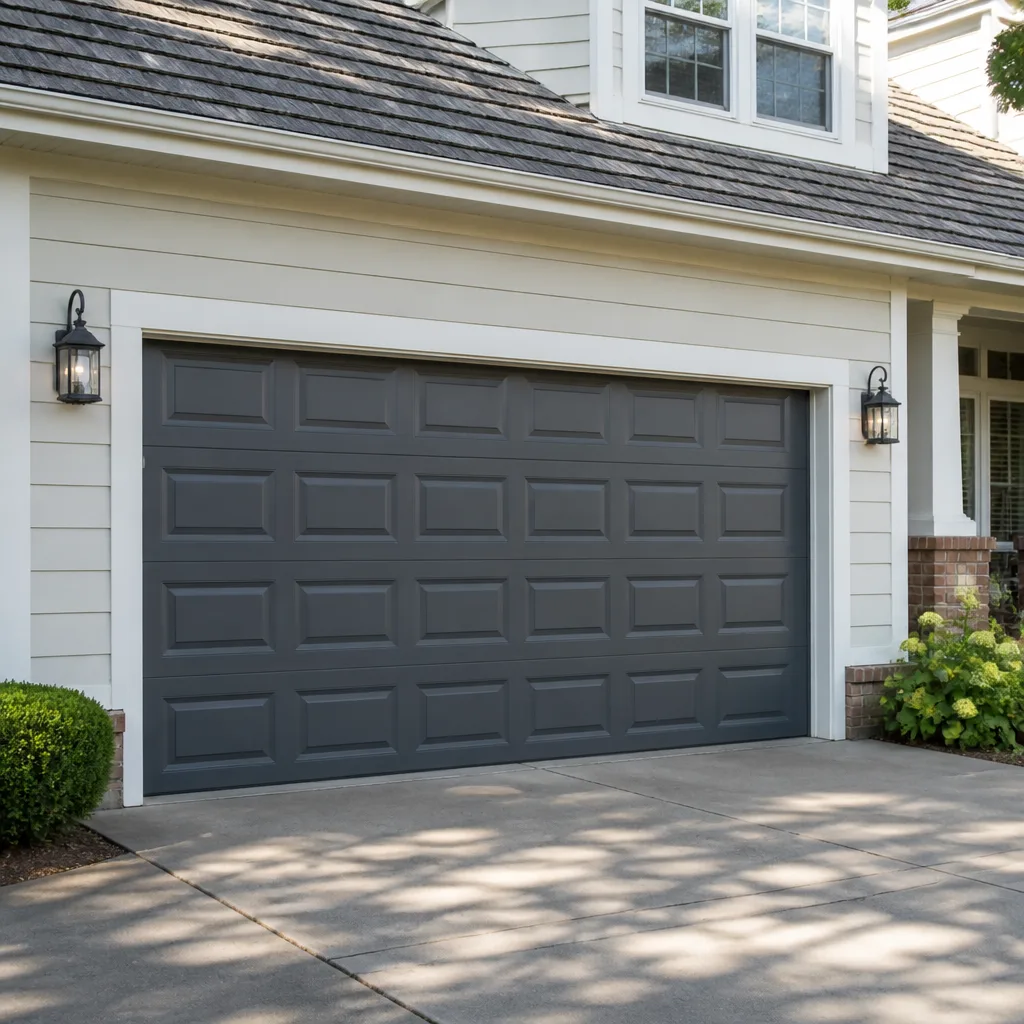 Raised-panel steel
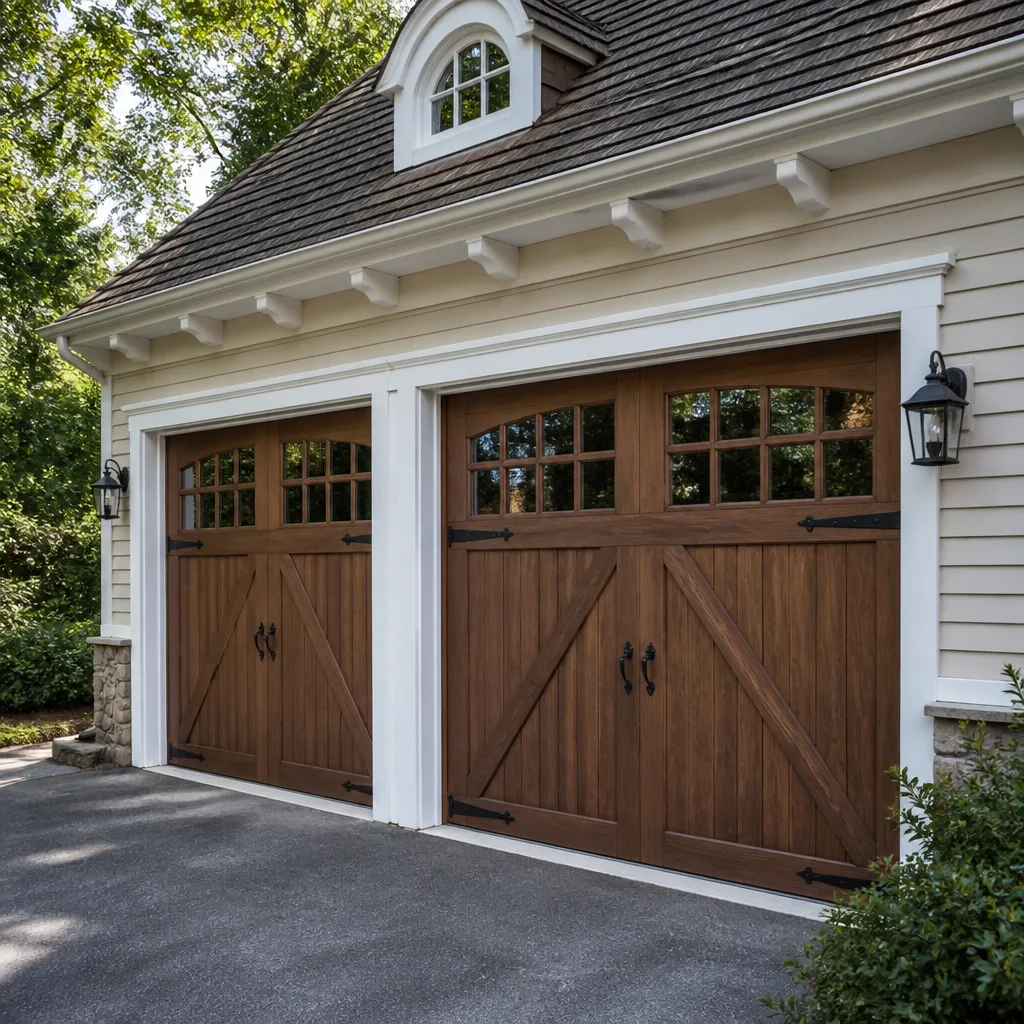 Carriage house
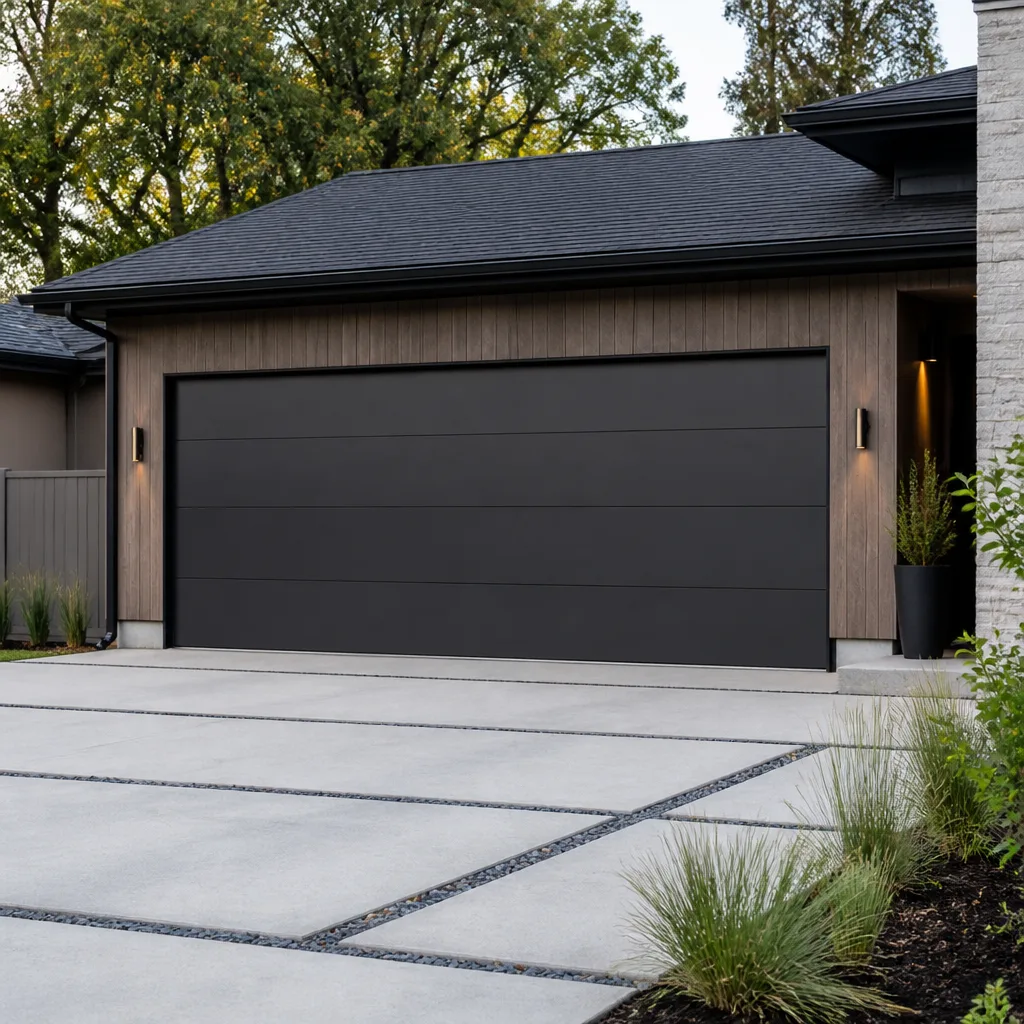 Modern flush
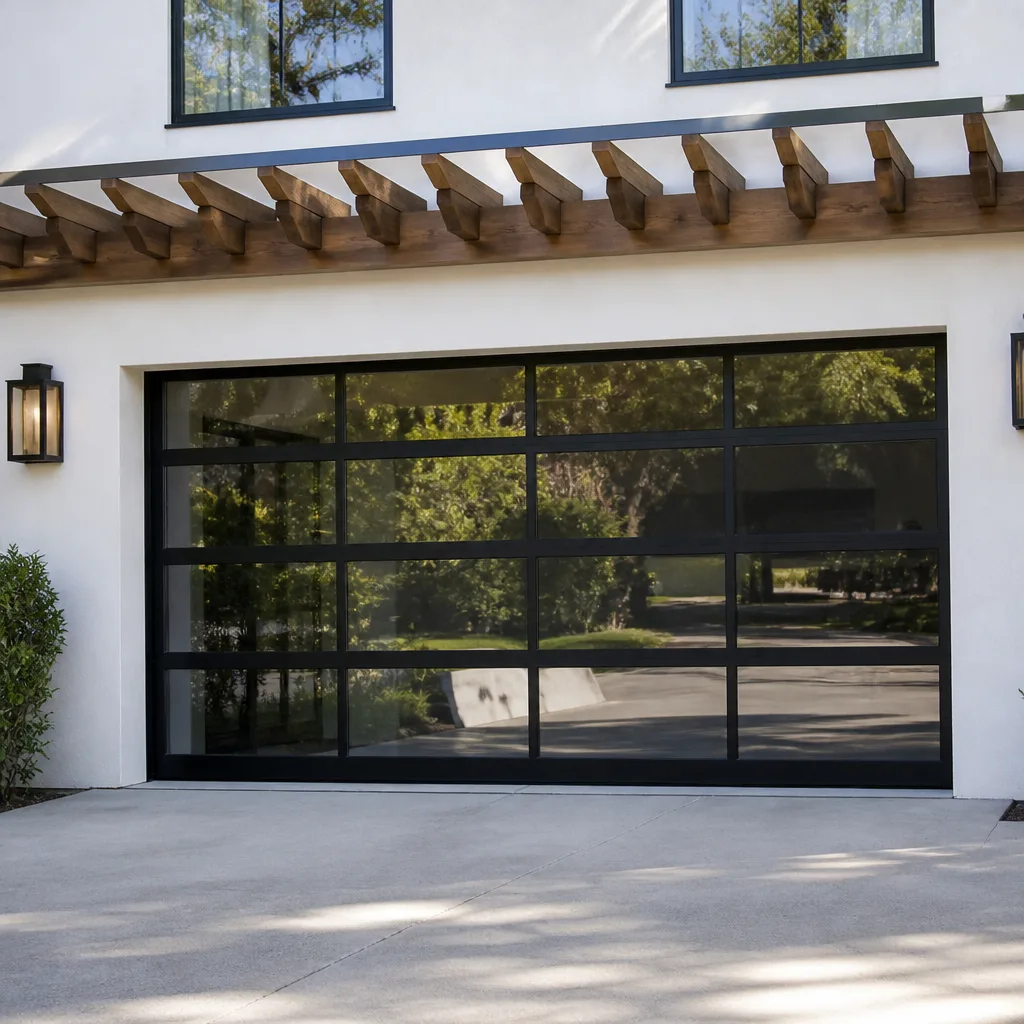 Full-view glass
 LiftMaster openers
 Chamberlain openers
Full 25-point door and opener safety check with every visit - springs, cables, rollers, tracks, and your LiftMaster or Chamberlain opener included
You get a price before we start. It does not change when the pro arrives.
Get your free estimateDIY vs Professional Garage Door: The Brockton Homeowner’s Decision Guide
Most advice about garage doors splits into two useless camps: “never touch it, call a pro” and “you can fix anything with a YouTube video.” Both are wrong. The real question isn’t whether you’re handy enough. It’s which specific parts of your door carry genuine injury risk and which ones are ordinary homeowner work. Torsion springs store hundreds of pounds of force and account for the majority of serious garage door injuries nationwide. A squeaky roller or a misadjusted travel limit is a different animal entirely. This guide draws a hard line between the two, explains what Massachusetts liability looks like if you get it wrong, and helps Brockton homeowners decide with clear eyes instead of fear.
Quick Answer
Some garage door work is safe for homeowners and some of it can kill you. Replacing rollers, lubricating hinges, adjusting opener travel limits, and reattaching a disconnect cable are reasonable DIY jobs. Anything involving torsion springs, extension springs, cables, bottom brackets, or the torsion shaft should go to a trained technician, full stop. If your door won’t open, won’t close, or has a visibly broken spring, call a professional before you touch it.
Styles & brands we work with
- Raised-panel steel
- Carriage house
- Modern flush
- Full-view glass
- LiftMaster openers
- Chamberlain openers
Table of Contents
- The Real Line: What Makes a Garage Door Task Safe or Dangerous
- Tasks That Are Genuinely Safe for Brockton Homeowners
- Tasks You Should Never Attempt Without Professional Training
- The Tools You Actually Need vs. What Videos Show
- Massachusetts Liability and Insurance If Something Goes Wrong
- The Real Cost Comparison: DIY vs. Professional
- Checking Your Door and Opener Brand Before You Decide
- How Brockton Weather Affects the DIY Decision
The Real Line: What Makes a Garage Door Task Safe or Dangerous
Your garage door is the largest moving object in your home. That fact gets repeated a lot, but the useful version is this: it’s also a system under constant tension. Springs, cables, and brackets are loaded even when the door is sitting still. That stored energy is what makes some repairs fundamentally different from swapping a light fixture.
The dividing line isn’t difficulty. It’s stored energy and what happens when it releases. A roller spins freely. A torsion spring holds enough torque to break bones or worse if it lets go while your hands are near it. A cable under tension can whip across a garage with serious force. These aren’t “be careful” situations. They’re situations where the wrong move gives you no warning and no second chance.
A second dividing line is calibration. Opener force limits, travel stops, and safety reverse sensors all need to be set correctly for the door to stop and reverse when it meets an obstruction. Get those wrong and the door becomes a hazard to anything in its path, including a child or a pet. Setting them is straightforward if you follow the manual. Setting them by feel, without the manual, is how people end up with a door that doesn’t reverse.
A third dividing line is parts sourcing. Some openers use proprietary remotes, wall controls, or logic boards that aren’t sold at hardware stores. You can spend a weekend trying to match a part that doesn’t exist in the aftermarket. Knowing your brand before you start saves that wasted effort. Brands like Chamberlain and Genie have broad aftermarket support; others are tighter.
Here’s how we describe the split to homeowners in Brockton: if a task involves the door’s counterbalance system, it’s professional work. If it involves the door’s moving surfaces, seals, or electronics that aren’t part of the counterbalance, it’s often reasonable DIY. That single question settles most decisions.
Tasks That Are Genuinely Safe for Brockton Homeowners
These are ordinary homeowner jobs. They involve low stored energy, standard tools, and mistakes that produce inconvenience rather than injury. If you’re reasonably comfortable with a screwdriver and you can follow instructions, these belong on your own schedule.
- Replacing nylon or steel rollers. With the door fully open and the opener disconnected, rollers slide out of their hinges. Buy the same diameter and stem type. This is the single most common source of noise complaints, and it’s a fair DIY job.
- Lubricating hinges, rollers, and tracks. A garage door-specific lubricant on the hinge pivot points and roller bearings quiet things down considerably. Don’t grease the tracks themselves; that attracts grit.
- Adjusting opener travel limits. Every opener has up and down limit settings, and every manual explains them. This is how you fix a door that stops six inches short of the floor or reverses before it’s fully closed.
- Testing and aligning safety reverse sensors. The photo-eye sensors near the floor should be aligned, clean, and lit. If the door won’t close and the opener light blinks, this is usually why. Cleaning the lenses and nudging the brackets back into alignment is safe and quick.
- Reattaching the emergency release cord. If the red handle and cord have come loose from the trolley, reconnecting them is a matter of following the manual’s diagram.
- Replacing weather seals and bottom rubber. A worn bottom seal lets water and cold air in. New seal slides into the retainer and is a straightforward swap.
- Pairing a new remote or keypad. Most openers have a learn button on the motor head. Press it, press your new remote, done. Chamberlain and Genie both document this clearly.
- Tightening loose hinge and bracket bolts. Bolts work loose over time and cause rattle. Snug them with a socket wrench, but don’t overtighten into wood that’s already splitting.
One caution that applies to every item on this list: disconnect the opener and raise the door fully before working on rollers or hinges, and never put your hands between door sections or near the tracks while the door is in motion. Safe tasks stay safe only when you respect the door as a moving object.
Tasks You Should Never Attempt Without Professional Training
These involve stored energy that can injure or kill. We’re not going to give step-by-step instructions for any of them, and no honest guide should. Here’s what they are and why they’re different.
- Torsion spring replacement or adjustment. A torsion spring is wound under hundreds of pounds of torque and held by winding bars. Releasing that tension incorrectly sends the bars flying and the spring whipping. This is the repair most associated with serious garage door injuries nationwide. garage door spring repair is a job for someone who does it regularly with the right bars, the right springs, and a winding procedure they’ve done many times.
- Extension spring replacement. Older doors often use extension springs along the horizontal tracks. They carry less torque than torsion springs but store plenty of energy, and a failed spring or clamp can travel. The safety cables that should run through them are there for a reason.
- Cable replacement or reattachment. Cables are under constant tension and are what actually lift the door. A cable that slips off a drum under load can cause severe lacerations. Never try to hook a cable back onto a drum by hand.
- Bottom bracket work. The bottom bracket is where the cable attaches, and it’s under load from the spring system. Removing it without relieving tension first is genuinely dangerous.
- Torsion shaft, drum, and bearing plate work. Anything on the counterbalance assembly requires the springs to be wound down first. That process itself is the risky part.
- Track realignment after impact. A bent track usually means something else moved too. Forcing a track back into place can twist the door and load the springs unevenly. This starts with an inspection, not a hammer.
- Panel replacement on a door with unknown spring condition. Swapping a section sounds simple until you realize the door has to be balanced and held in position during the swap. If the springs are weak, the door can come down.
If your door has a broken spring, a snapped cable, or a door hanging crooked in the opening, stop using the opener. Don’t run it to see if it works. Call for garage door repair and leave the door alone until someone qualified looks at it. That’s not a sales pitch; it’s the advice we give because we’ve seen what happens when a loaded spring is treated like a bent hinge.
The Tools You Actually Need vs. What Videos Show
Videos make garage door work look tidier than it is. A few tools make the safe jobs easy. A long list of specialty tools makes the unsafe jobs look achievable when they aren’t.
For the homeowner-safe tasks, you need a socket set, a screwdriver set, a pair of pliers, a step ladder, and a garage door lubricant. That’s genuinely it. A cordless drill helps with hinge screws. A tape measure helps with weather seal sizing. You probably own most of this already.
What videos show that isn’t realistic for a one-time job: winding bars, spring clamps, a cable puller, and a set of proper drums. Those tools exist because the job requires them, and buying them for a single repair costs more than hiring the work out. Worse, having the tool doesn’t give you the feel for how much tension is left in a spring. That feel comes from repetition, not from a video.
There’s also the matter of what a video leaves out. Camera angles hide the moment a spring is partially wound. They don’t show the door shifting when a cable is released. A one-time DIYer watching a fifteen-minute clip is seeing the clean version, not the version where something goes wrong.
Our advice for Brockton homeowners: if a task needs a tool you’d only use once, that’s a service call, not a project. If it needs tools already in your garage, go ahead.
Massachusetts Liability and Insurance If Something Goes Wrong
This is the part most DIY guides skip. What happens if you do the work yourself and something fails later?
Massachusetts homeowners are generally responsible for the condition of their own property. If you replace a component incorrectly and it fails, causing damage to your own home, your homeowners policy may or may not cover the resulting damage depending on your policy terms and how the loss is classified. Policies commonly exclude damage caused by faulty workmanship, though the exact treatment varies by carrier and by how the claim is framed. Read your policy or call your agent before assuming a DIY repair is covered if it goes wrong.
The bigger exposure is injury. If a neighbor helps you and gets hurt, or a family member is injured by a door you adjusted, that’s a different category of problem than a dented panel. Homeowners liability coverage often responds to injuries on your property, but a claim involving work you performed yourself can get complicated. This is general information, not legal advice, and it’s worth a conversation with your insurance agent if you’re weighing a repair.
Permits matter too. Most cities require a permit for structural changes to a garage, and some require one for door replacement. Brockton is no exception to that general pattern. If you’re replacing a door rather than repairing one, call the city’s building department and ask what applies to your address. Getting that answer takes five minutes and prevents a headache at resale.
None of this means don’t touch your door. It means understand that a DIY spring job isn’t just a technical risk. It’s an insurance and liability question too.
The Real Cost Comparison: DIY vs. Professional
Homeowners often assume DIY saves money. Sometimes it does. Often it trades a known cost for an unknown one. Here’s the honest breakdown for the most common jobs.
| Job | DIY reality | Professional reality |
|---|---|---|
| Roller replacement | Parts are inexpensive; a few hours of your time; low risk | Quick service call; parts and labor bundled |
| Weather seal replacement | Low parts cost; straightforward | Small labor charge; done with the door checked over |
| Opener travel limit adjustment | Free if you follow the manual; risk is a misadjusted door | Included in most opener service calls |
| Remote or keypad pairing | Free; a few minutes | Usually handled during another visit |
| Torsion spring replacement (one spring) | Parts cost plus tools you’ll never use again, plus injury risk | Typical Brockton-area range is roughly $180 to $340 per spring for a standard job |
| Matched spring pair | Same tool problem, doubled | Roughly double the single-spring range, since a pair is usually replaced together |
| Cable replacement | Not a realistic DIY job | Priced per job after inspection |
Two things to understand about those numbers. First, they’re typical estimates, not quotes. The written estimate you get after an inspection is the price that applies. Second, a matched pair of springs is usually replaced together even when only one breaks, because the second spring is the same age and under the same load. So a “one spring” price and a “pair” price are different numbers, not the same number applied twice.
The hidden DIY cost is the redo. A spring installed at the wrong wind, a cable routed on the wrong side of the drum, or a door left out of balance usually means paying a professional to fix the DIY attempt on top of the original problem. That’s the scenario where DIY costs more than it saved.
Checking Your Door and Opener Brand Before You Decide
Your brand determines whether DIY parts sourcing is realistic. Some systems are open and well-supported. Others use proprietary components that only come through dealer channels.
Start by finding the label. Openers usually have a model sticker on the motor head or inside the light cover. Doors often have a sticker on the inside of a panel or a stamp on the bottom section. Write down the brand and model number before you order anything.
Then consider what that means for your project:
- Chamberlain and Genie openers have broad aftermarket support. Remotes, gears, logic boards, and safety sensors are generally available, and manuals are easy to find. DIY is more realistic here.
- Clopay and Amarr doors use standard sectional construction, and common parts like rollers, hinges, and bottom seals are widely available. Panel replacement still depends on your specific model and color, which is worth checking before you assume.
- Proprietary or older systems can leave you hunting for a discontinued board or a remote that only pairs with one generation of opener. That’s where calling us makes more sense than a parts search.
We work on the brand you already have, and we’re factory-familiar with eight major brands including LiftMaster, Chamberlain, Genie, Clopay, Amarr, Wayne Dalton, Craftsman, and Raynor. That familiarity matters for garage door opener repair, where the diagnosis is often brand-specific. If your opener is a brand not on that list, be upfront about it when you call so we can tell you honestly whether it’s a fit.
How Brockton Weather Affects the DIY Decision
Brockton’s winters are hard on garage doors. Freeze-thaw cycles work on seals, hinges, and the bottom rubber. Road salt tracked in on tires sits on the bottom section and accelerates corrosion on steel doors. Cold makes lubricants stiffen and can make a marginal spring more likely to fail.
That has two practical consequences for this decision. First, weather seal and bottom rubber replacement are worth doing yourself before winter rather than after. A failed seal lets meltwater in, and that water refreezes. Second, a door that’s been sluggish or noisy all fall is more likely to fail in the cold, and the failure is more likely to be a spring or cable than a roller. If you’re hearing a bang from the garage on a cold morning, that’s spring territory, not DIY territory.
Brockton’s housing stock adds another wrinkle. Older homes around the Campello and Montello neighborhoods often have original or once-replaced doors with extension springs and older openers. Those systems have different failure modes than a modern torsion setup, and parts for them are sometimes harder to source. Knowing what you actually have before deciding is worth ten minutes with a flashlight.
Summer humidity is the other end of it. Wood doors swell and stick, and that sticking puts extra load on the opener. A door that binds in July is usually a door that needs an adjustment, not a new opener. That’s a case where a service call diagnoses the real issue instead of replacing the wrong part.
Common Mistakes to Avoid
- Assuming a broken spring is a broken opener. When a spring fails, the opener often runs and the door doesn’t move, which looks like an opener problem. It isn’t, and running the opener repeatedly can burn out the motor. Stop and check the springs first.
- Buying a spring from a hardware store without matching the wire gauge and length. Springs are sized to your door’s weight. The wrong spring leaves the door out of balance and puts the opener under constant strain. This applies whether you install it or someone else does.
- Greasing the tracks. It seems logical and it’s wrong. Lubricant in the tracks collects grit and dirt, which wears the rollers faster. Lubricate the hinge points and roller bearings instead.
- Ignoring the safety reverse test. Put a roll of paper towels under the door and close it. The door should reverse on contact. If it doesn’t, something needs adjustment, and that’s true in every Brockton home regardless of door age.
- Trying to straighten a bent track with a hammer. Tracks bend because something else moved. Forcing them back usually twists the door and loads the springs unevenly, turning a track problem into a spring problem.
- Replacing one spring when both are the same age. The second spring is under the same load and the same cycles. Replacing one and leaving the other is a common way to pay for two service calls instead of one.
- Skipping the written estimate. Whether you hire us or anyone else, get the price in writing before work starts. Any legitimate shop will put it in writing without being asked twice.
See the difference
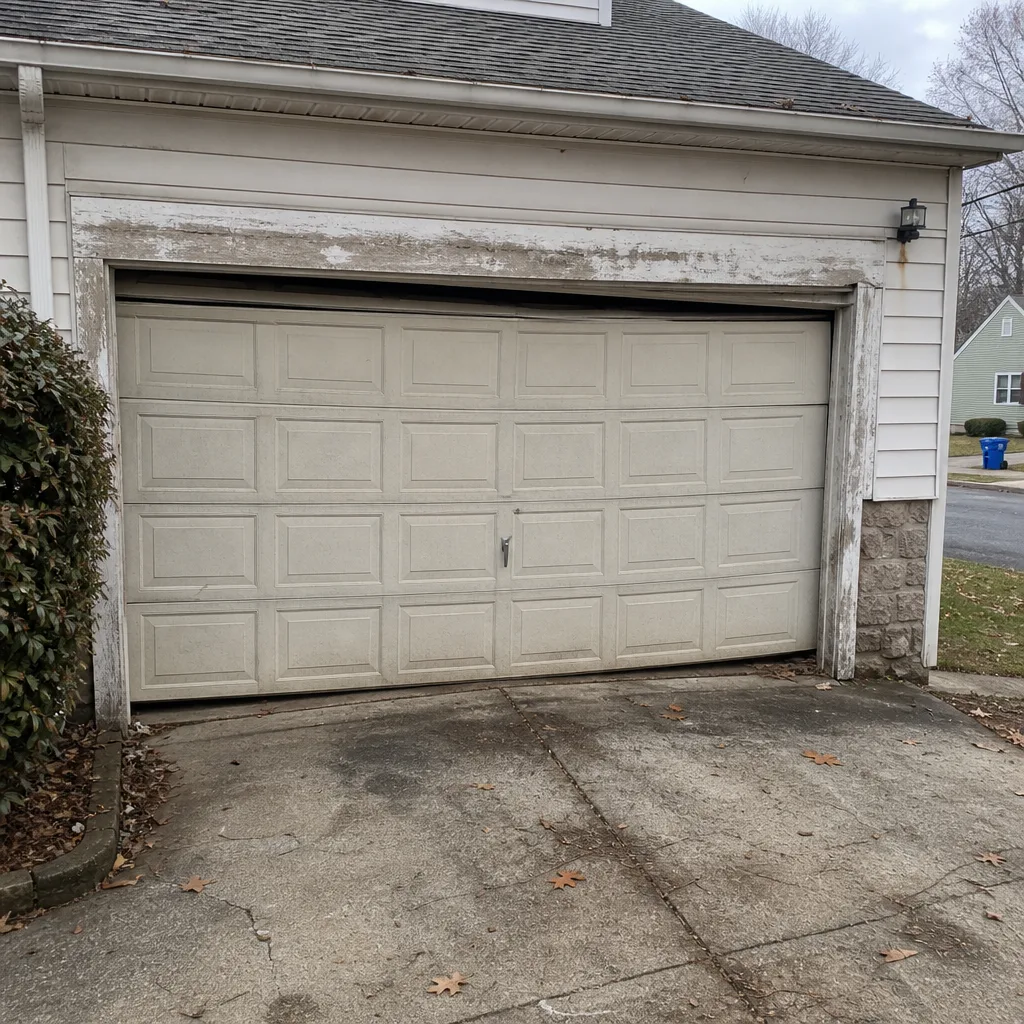 Before
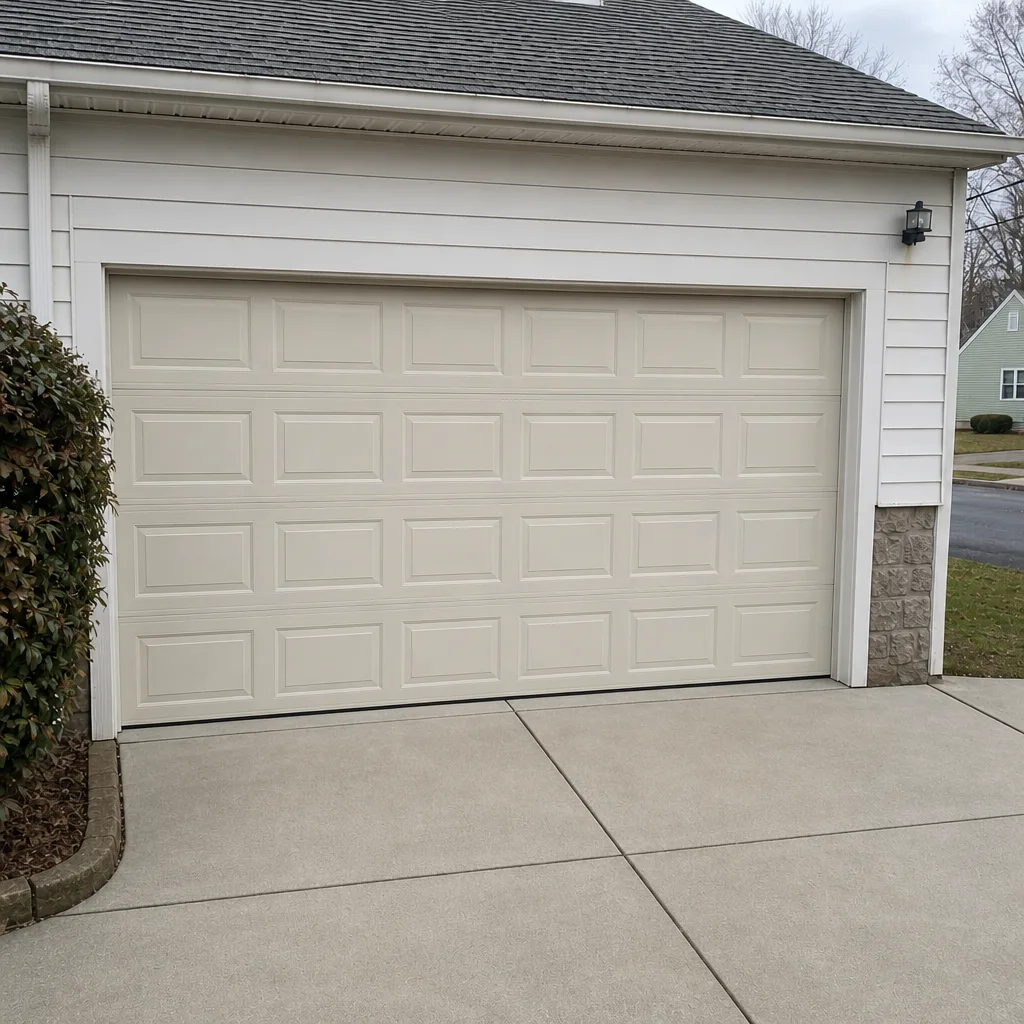 After
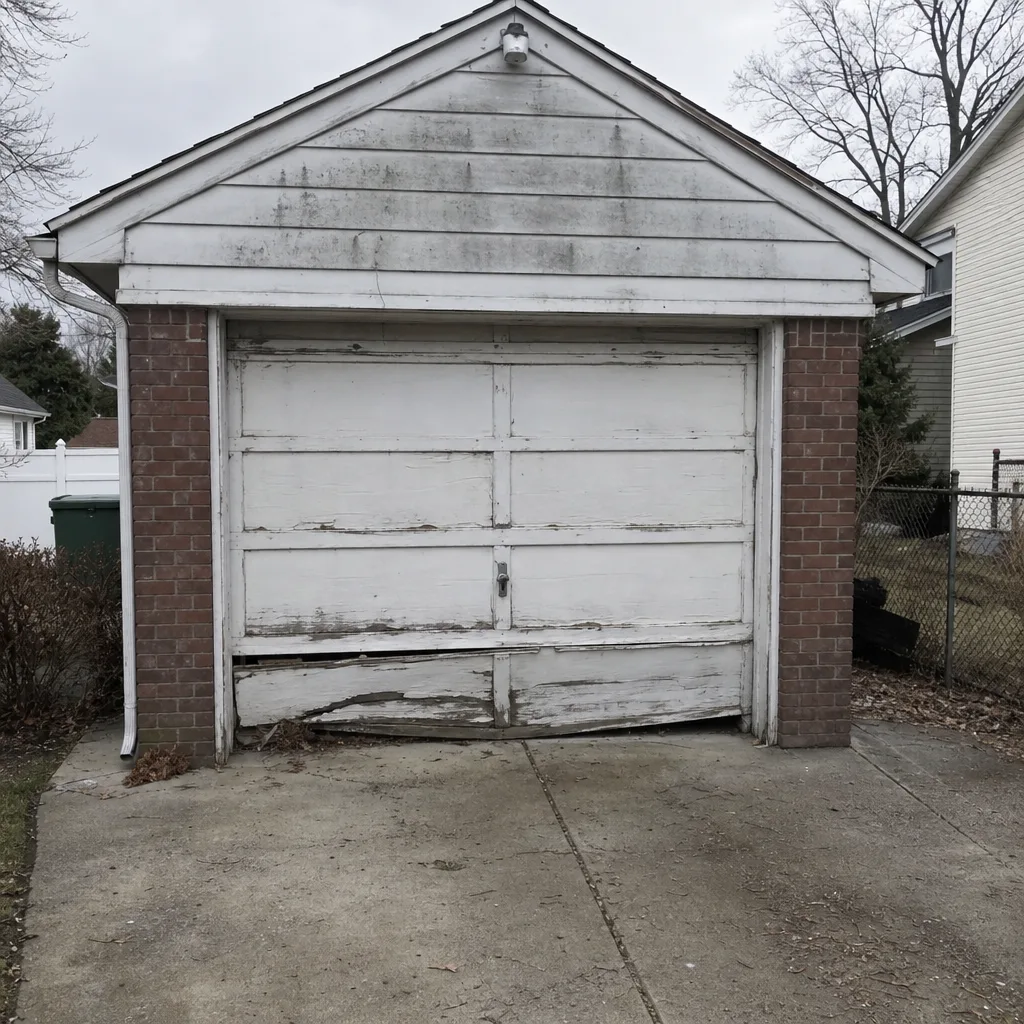 Before
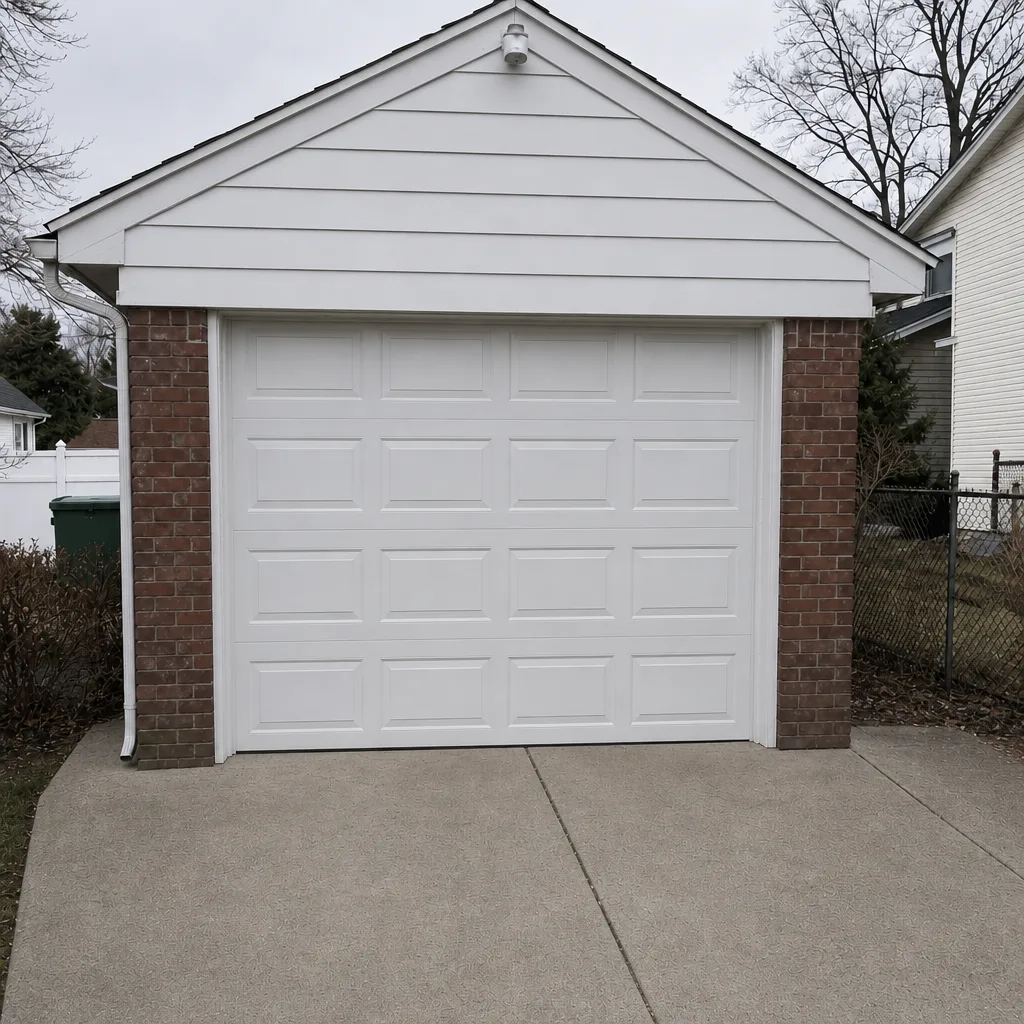 After
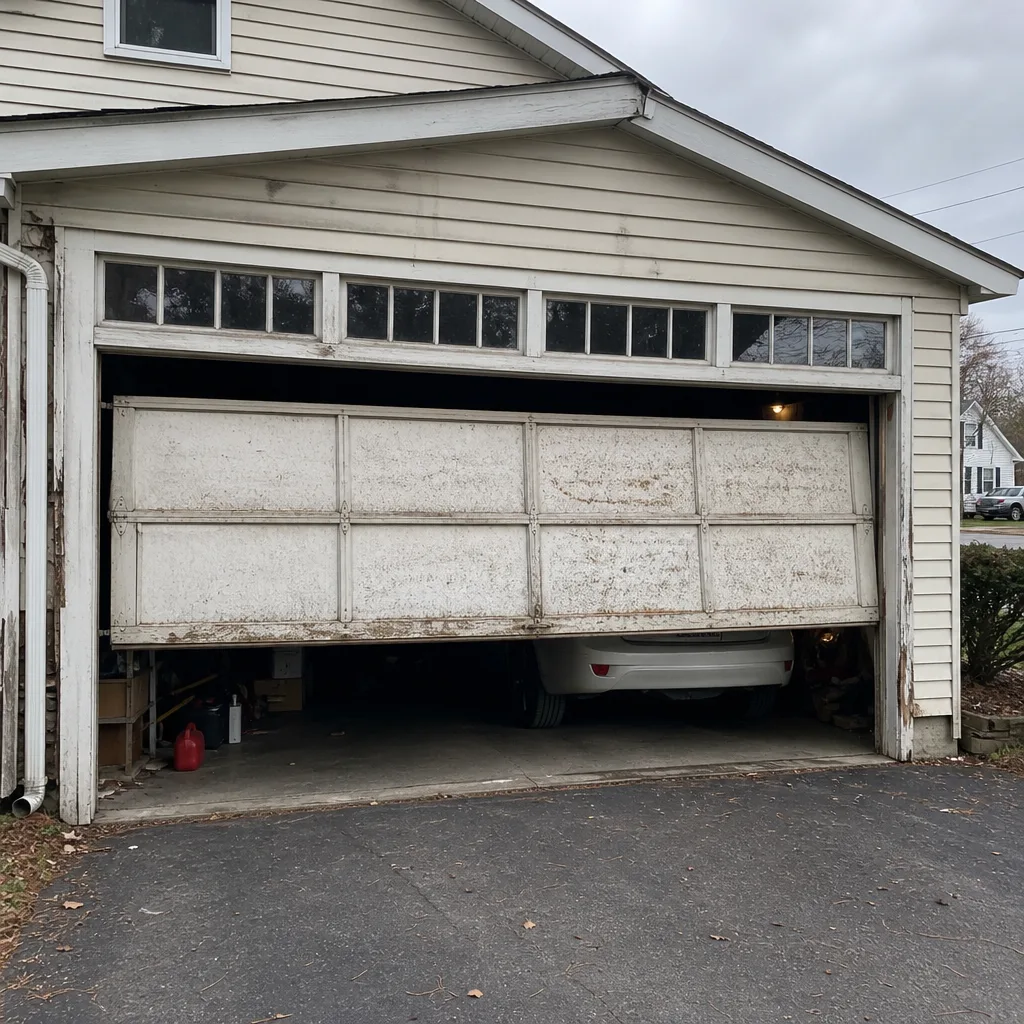 Before
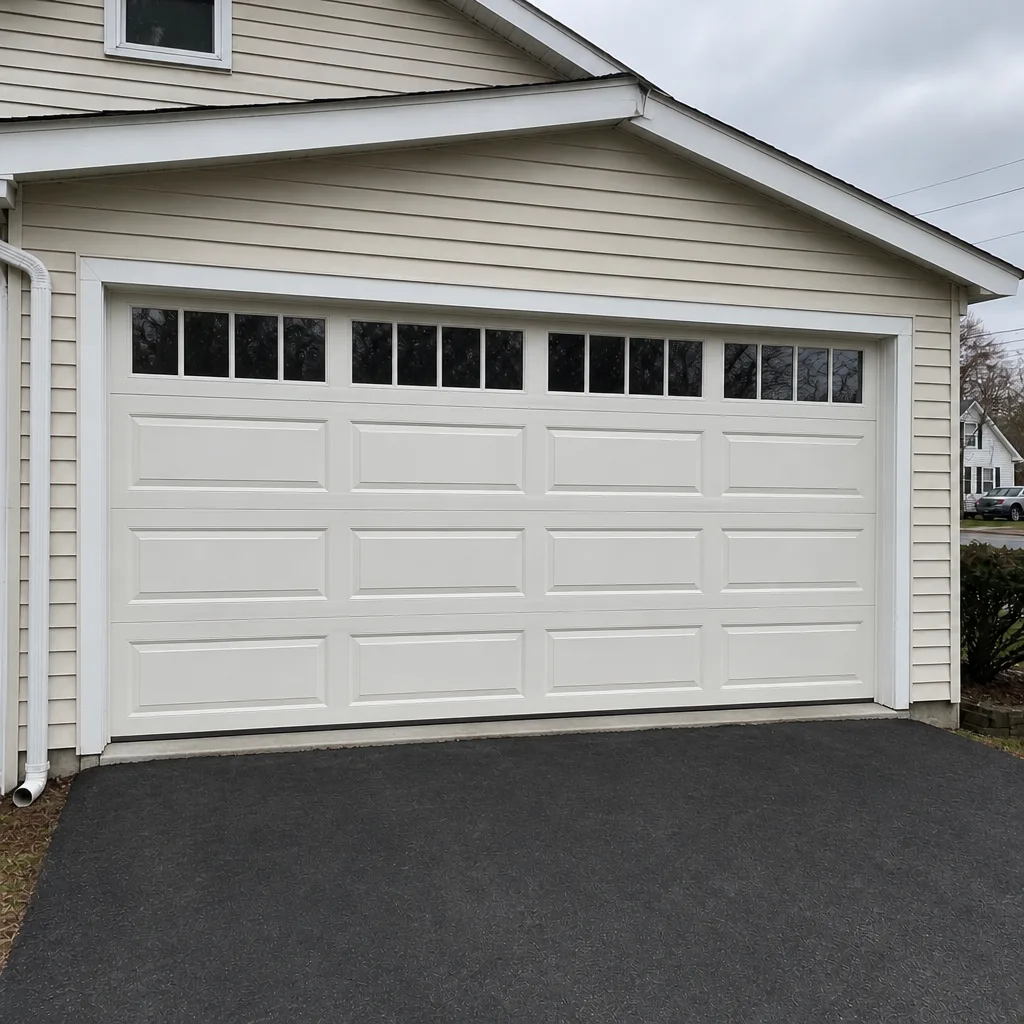 After
When to Call a Professional
Call a professional for anything involving springs, cables, bottom brackets, or the torsion shaft. Call for a door that’s hanging crooked, a door that won’t close, or a door that’s come off its track. Call when the opener runs but nothing moves, when you hear a loud bang from the garage, or when the safety reverse test fails and adjustment doesn’t fix it. Call if your opener is a brand you can’t find parts for, or if your door is old enough that you’re unsure what’s inside it. And call if you’ve started a repair and realized halfway through that you’re in over your head. That last one is more common than people admit, and there’s no shame in it.
The company behind this guide, Brockton Garage Door Repair Co, offers free estimates in Brockton. Our technicians have up to 15 years of experience, we work on both doors and openers so you’re not bounced between two companies, and we’re equipped to service LiftMaster, Chamberlain, Genie, Clopay, Amarr, Wayne Dalton, Craftsman, and Raynor products. Emergency garage door service is available when a door that won’t close leaves your home exposed, because that’s a security problem rather than a scheduling inconvenience. Call (877) 335-4654.
Frequently Asked Questions
No. A torsion spring holds hundreds of pounds of torque, and releasing it incorrectly can cause serious injury, which is why this repair is associated with the majority of serious garage door injuries nationwide. It requires winding bars, correct spring sizing, and a winding procedure done many times to develop a feel for the tension. Call (877) 335-4654 for a free estimate on spring replacement; the typical range is roughly $180 to $340 per spring, and a matched pair is usually about double that.
Replacing rollers, lubricating hinges and bearings, adjusting opener travel limits, aligning or cleaning safety sensors, reattaching the emergency release cord, replacing weather seals and bottom rubber, and pairing a new remote are all reasonable homeowner jobs. They involve low stored energy and standard tools, and mistakes tend to cause inconvenience rather than injury. Anything touching springs, cables, bottom brackets, or the torsion shaft is different and should go to a trained technician.
It depends on your policy and how the loss is classified. Policies commonly exclude damage from faulty workmanship, so a repair you performed incorrectly that later fails may not be covered, while injury to a third party on your property is a separate question that liability coverage may address. This is general information rather than legal advice; call your insurance agent with your specific situation. For the repair itself, call (877) 335-4654 for a free estimate and take the guessing out of it.
We’re closed Saturday and open Sunday through Friday, 7am to 7pm. If a door fails on a Saturday, call and we’ll book you for Sunday rather than leave you guessing. Emergency garage door service is a core part of what we do, because a door that won’t close is a security problem that can’t sit until the next business day.
A typical single-spring replacement in the Brockton area runs roughly $180 to $340, and a matched pair usually costs about twice that because the two springs are replaced together. These are estimates, not quotes; the written estimate you receive after an inspection sets the final price, and it’s agreed before any work starts. Call (877) 335-4654 for an exact quote; estimates are free.
Usually not, because it’s typically a broken spring or a disconnected cable rather than an opener problem. The opener is doing its job; the counterbalance system has failed. Stop running the opener so you don’t burn out the motor, and call for service. If it turns out to be a simple disconnect issue, we’ll tell you that instead of selling a repair you don’t need.
Most cities require a permit for structural work and some require one for door replacement, so the reliable answer is to ask. Call Brockton’s building department and describe exactly what you’re doing, and they’ll tell you what applies to your address. It takes a few minutes and avoids a problem later.
The Bottom Line
The DIY versus professional question for garage doors comes down to stored energy, not skill. Rollers, seals, travel limits, sensor alignment, and remote pairing are fair homeowner work with ordinary tools. Springs, cables, bottom brackets, and the torsion shaft are not, and no video changes that. Weigh the redo cost and the insurance question before you decide, check your brand so you know what parts are actually available, and get any price in writing before work begins. When the job crosses the line, call (877) 335-4654 for a free estimate in Brockton.
Written by the team at Brockton Garage Door Repair Co.